



Principle of Cascade Refrigeration Systems
Cascade refrigeration systems consist of two (or more) single-stage refrigeration systems connected together, divided into “high-temperature stage” and “low-temperature stage”.
-
The evaporator of the high-temperature system serves as the condenser for the low-temperature system, using a special heat exchanger known as a “cascade heat exchanger”.
-
The high-temperature stage of the refrigeration system removes the condensation heat of the low-temperature refrigerant; the low-temperature stage removes the heat load of the refrigerated object and evaporates to absorb heat. (Due to the large temperature difference, a direct single-stage refrigeration cycle cannot be used).
-
The low-temperature stage uses a refrigerant with low boiling point and low condensing pressure (generally non-toxic) and discharges high-temperature and high-pressure gas, which is condensed in the cascade condenser.
-
The high-temperature stage uses a refrigerant with a relatively higher boiling point, forming a cascade refrigeration system.
-
This setup separates the extremely low-temperature cooling from the ordinary system and uses a special cascade method to reach ultra-low temperatures.
Reasons for Using Cascade Refrigeration Systems
-
Due to the limitations of current low-temperature refrigerants, it is difficult for a single-stage system to directly reach ultra-low temperatures.
-
If only low-temperature refrigerant is used, the suction pressure of the compressor will be very low, which reduces its cooling capacity and efficiency, increases the compression ratio and discharge temperature, and leads to difficult oil return and unreliable operation.
-
In practical application, single-stage compression can only meet up to -40°C to -85°C; for lower temperatures such as -90°C to -125°C, cascade refrigeration is needed.
-
The cascade system provides better pressure balance and allows for selecting refrigerants suitable for different temperature levels, thus enabling optimization of energy consumption and safety.
-
Since different refrigerants are used, their chemical properties are not the same. It is necessary to ensure complete separation between the two systems to avoid mixing or cross-contamination.
Advantages of Cascade Refrigeration Systems
-
Cascade refrigeration allows the use of multiple types of refrigerants. This optimizes efficiency and improves the reliability of ultra-low temperature systems.
-
Compared to single-stage low-temperature units, cascade systems are safer, easier to maintain, and more energy-efficient when operating at very low temperatures.
-
This system is ideal for environments requiring temperatures below -85°C, such as biological product preservation, aerospace applications, and precision instruments.
Features of High-Powered Ultra-Low Temperature Cascade Chillers:
Wide Temperature Range for Applications:
-
Dual-stage cascade chillers can meet cooling requirements down to -85°C to -85°C; three-stage cascade systems can reach temperatures as low as -90°C, and the lowest design temperature is -125°C, meeting various process cooling needs.
Wide Range of Cooling Capacity:
-
Depending on different requirements, a single unit can achieve a cooling capacity of up to 300KW under -45°C outlet temperature conditions.
Multiple Refrigerants and Flexible Configuration Options:
-
The cascade refrigeration system can use different refrigerants based on the operating temperature. For example, high-temperature stages can use R22, R404A, R507A, etc.; low-temperature stages can use R23, R508B, etc. It can also adapt to different compressors (e.g., semi-hermetic, screw compressors) depending on different working conditions.
High-Efficiency and Stable Operation:
-
The high-temperature side of the unit uses well-known compressor brands like BITZER and BOCK, which offer strong and stable power and are mainly used in domestic and international first-tier brands.
Intelligent Control System:
-
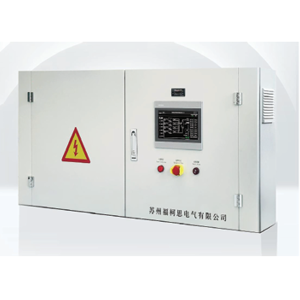
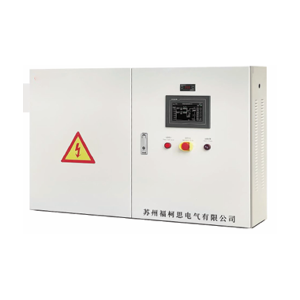
Specially designed for industrial refrigeration applications, with intuitive control panels, fluid flow monitoring, historical record logging, remote monitoring, and various protection functions. It supports dual control models (manual/automatic) for seamless switching.
Compact Structure and Easy Installation:
-
The entire system integrates cascade refrigeration structure with optimized piping and refrigerant flow design, resulting in a compact footprint and easy transportation and installation.
System Integration:
-
The evaporator, condenser, compressor, separator, and oil separator are all integrated into one unit, reducing pressure drops and improving overall efficiency.
